After two days playing MXGP 2026 on PlayStation 5, the game delivers a massive visual improvement over MXGP 24 and offers a demanding riding experience. However, it also exposes shortcomings in its game modes, race information and track-boundary behaviour. The absence of Rewind remains its biggest issue.
Better graphis
After the disappointment that was MXGP 24, especially following so many years of enjoying Milestone’s instalments, there were plenty of doubts about what to expect from MXGP 26. The change of developer had not exactly got off to a promising start. However, the first impressions of this new instalment are very different. This time, it is clear that real work has gone into the game.
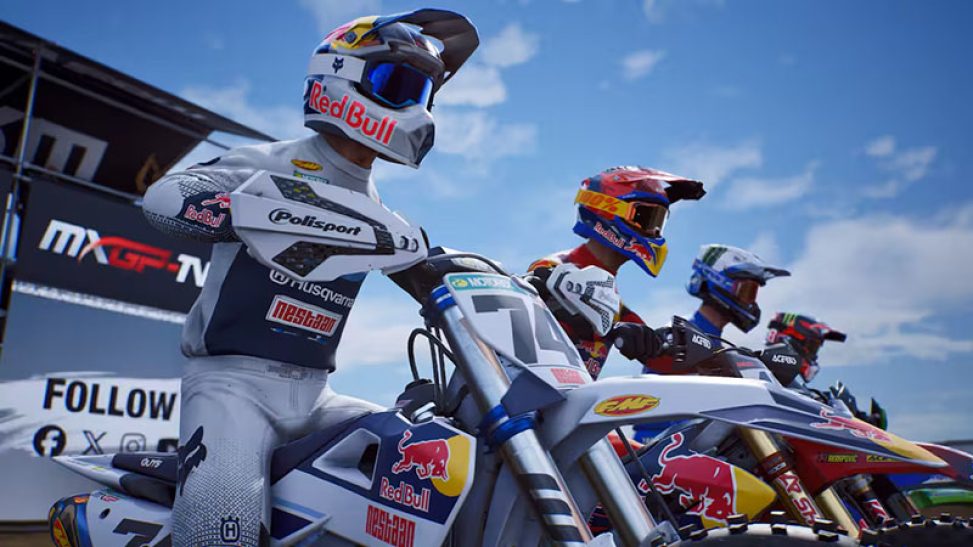
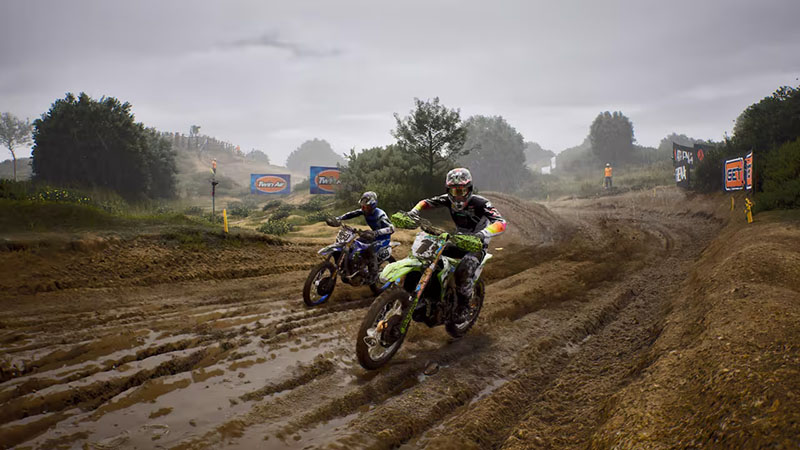
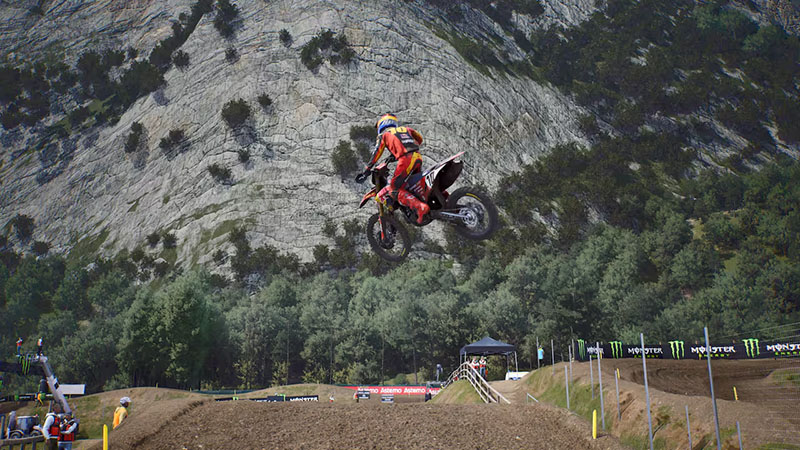
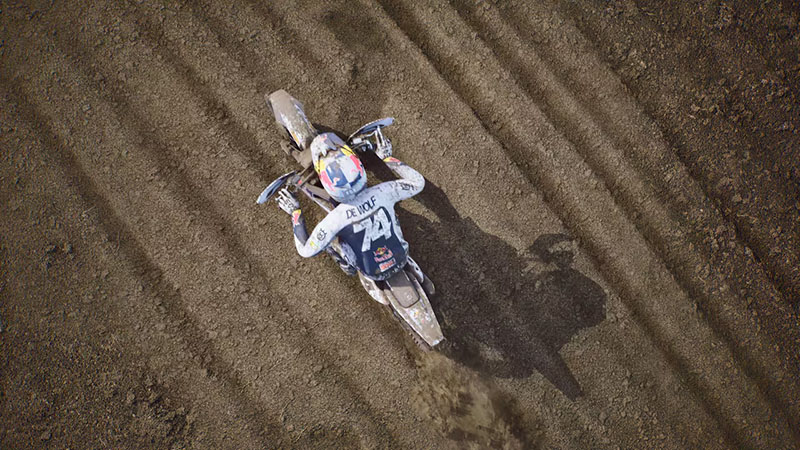
The graphical improvement is spectacular. The bikes are much more accurately recreated, the details of the riders’ gear are excellent, and the movements on the bike look far more natural. The visual leap is noticeable even compared to some of Milestone’s previous instalments.

But perhaps one of the aspects that surprised me most is the work put into the tracks. For years, I had the feeling that the major elevation changes found on real-life circuits were never properly translated into the game. In MXGP 26, that has changed considerably. Teutschenthal is a perfect example: its characteristic uphill section and other elevation changes are much better represented, creating a sense of depth and difficulty that was practically missing before.
There is also a significant improvement in the terrain and ruts. When racing with our created rider, we can use bikes with standard liveries. During these first few hours, I have not been able to fully explore how much customisation is available for the graphics, but the visual result is very good. Overall, the graphics and track recreation have taken a huge step forward.
Game Modes: A Difficult Absence to Explain
The menu offers four main game modes: Time Attack, Grand Prix, Championship and Online. There is no career mode in which players can start in the lower categories, receive team offers, switch manufacturers and progress from MX2 to MXGP.
Competing in a championship is not the same as building a sporting career, and this omission significantly limits the game’s depth.
We cannot create a rider and develop their career from the lower categories all the way to the top. Imagine starting in 125cc or MX2, achieving good results, attracting the attention of teams, receiving offers, switching manufacturers, winning the MX2 World Championship and then moving up to MXGP. That entire progression system, including transfers and contracts, is simply missing.
We can compete in championships, but we cannot experience a complete professional career. It is a difficult omission to understand in an officially licensed Motocross World Championship game.
Timed Practice issue
In timed practice, for example, we are given five minutes. In real-life competition and other racing games, when the clock reaches zero, riders are normally allowed to complete the lap they are already on. Not here: the session ends immediately, even if we are in the middle of a promising lap. In practice, those five minutes are usually enough for two laps rather than a third.
I also cannot find an option to skip ahead or speed up the session time. If there is no longer enough time to complete a useful lap, we simply have to wait without being able to do much else.
When entering the pits, I also miss having a clear timing screen showing the lap times and positions of the other riders. These are basic features that would help make practice sessions feel much closer to the real thing.
Lack of information
The start procedure also leaves room for improvement. The traditional 15-second and 5-second boards before the gate drops are missing. Instead, we get an indicator to prepare for the start and time our launch correctly. It works as a gameplay mechanic, but an iconic element of real Motocross is lost.
During the race, the interface displays the remaining time, our position and a track map. However, it does not show the time gaps to the rider ahead or behind, nor does it provide a live classification showing the leaders.
I have checked the display options, and while I can hide or show the existing elements, there is no way to add the missing information. This makes it difficult to know whether we are closing the gap or whether someone is catching us.
Even in the championship screens, I miss more complete cumulative statistics, such as the number of race wins achieved. And during podium celebrations, seeing the riders with their helmets still on looks rather unnatural.
None of these issues ruins the game on its own, but together they create the impression of an experience that is not quite finished.
The initial riding experience is quite positive, although there are some aspects that take time to get used to. The rider’s movements on the bike are well implemented, but I found the default settings too aggressive.
I am used to manually shifting the rider’s weight forwards and backwards, particularly over jumps. Here, even a slight input towards the front was enough to send the rider headfirst over the handlebars.
Fortunately, this can be adjusted. I reduced the speed and aggressiveness of the rider’s movements, and the riding experience immediately became much smoother and more natural. It is an adjustment I recommend trying from the very beginning.
Another interesting aspect is how the bike behaves inside the ruts. When we manage to get into one properly, we can clearly feel the bike turning more quickly and following the line shaped by the terrain. It adds a convincing technical element to the riding experience.
MXGP 2026’s Biggest Mistake: No Rewind Function
After two days of playing, my main criticism remains the same: MXGP 26 does not feature a Rewind function, meaning the ability to turn back a few seconds to correct a crash or an incident.
In a discipline where the terrain constantly changes, ruts alter racing lines and contact between riders is frequent, this feature would be particularly useful.
MX2 vs MXGP: Two Different Experiences
I have tested both the 250cc and 450cc bikes, and the difference in handling is clear. The 250 is easier to control, link corners together on and ride without making as many mistakes. The 450 requires considerably more precision and punishes any abrupt movement much sooner.
This also shows that MXGP 26 has some genuine simulation qualities. It is not an easy game, and it forces players to learn.
However, the difficulty should come from mastering the bike and the terrain, not from constant automatic repositioning or collisions with trackside objects that trigger reactions which are difficult to anticipate.
Many great racing games feature an optional rewind system. And if there is one discipline where it makes perfect sense, it is Motocross.
On an asphalt circuit, we can memorise our braking points and references, then repeat clean laps. In Motocross, the terrain changes, ruts develop and the bike’s reactions vary with every lap.
We might enter a rut slightly incorrectly, clip a trackside barrier or get hit by another rider and end up on the ground. These incidents are not always the result of our own mistakes.
If we are racing in a ten-minute moto, completing it without any incidents can be quite difficult. Without Rewind, we have to accept every one of these situations, which can sometimes lead to more frustration than enjoyment.
This is not about making the game easier. It is about offering an optional tool. Players who want to race without assists should be able to do so, but those who prefer to rewind a few seconds should also have that option.
Track Limits: Too Strict
Trackside barriers, advertising boards and even some of the figures placed around the circuit are very close to the racing line. While this looks realistic visually, it can become problematic when riding.
A slight touch can send the bike flying in a disproportionate manner or trigger an automatic repositioning. On a downhill jump, for example, simply clipping an object near the track can be enough to lose control.
On other occasions, when we go just a few metres off track, the game automatically puts us back on the racing line without allowing us to try and recover on our own.
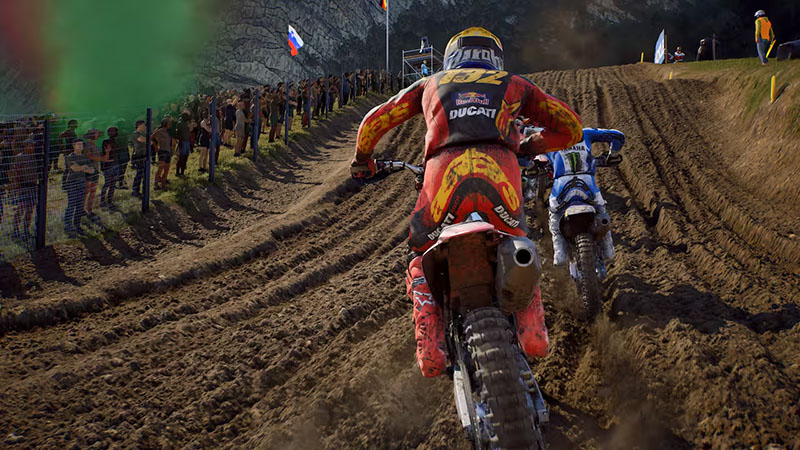
Once again, Teutschenthal provides a very clear example. The pit straight, which is usually bumpy and features some difficult ruts, can throw the bike towards the outside. If we take an outside rut and end up slightly off track, the elevation change makes it difficult to get back onto the circuit.
However, before we can recover control ourselves, the game automatically repositions us.
There is also an especially frustrating situation: on one occasion, I got stuck against an advertising board and could not free the bike normally. There is no reverse gear to manoeuvre out of the situation. There is a repositioning button, but having to use it breaks the flow of the race.
Between unpredictable collisions, strict track boundaries and constant repositioning, a moto can become a series of interruptions rather than a smooth racing experience.
To Go Fast, You First Have to Learn Not to Make Mistakes
One of the things that has caught my attention most is that MXGP 26 forces you to change your usual mindset.
When chasing a fast lap, the natural approach is to push hard and make the most of every metre of the track. Here, however, it is often more effective to ride progressively, avoid unnecessary risks and focus on staying on track.
During qualifying, we gradually learn how the bike reacts and start putting together clean laps. But once the race begins, contact, compromised lines and mistakes become more frequent.
That is when crashes, automatic repositioning and the inability to rewind start affecting the enjoyment of the game.
The problem is not that the game is difficult, but that this difficulty does not always feel natural.
MXGP Riders Are Much Better Represented
Being able to race against real riders such as Rubén Fernández, among other names from the championship, adds plenty of appeal for those of us who follow MXGP every weekend.
The bikes, gear and circuits create an experience that feels much closer to the real World Championship. After so many years watching this franchise evolve, it is encouraging to see a significant effort being made to represent our sport more accurately.
Conclusion: MXGP 2026 Deserves a Chance
After two days playing MXGP 2026, my assessment is more complete. The visual leap over MXGP 24 is enormous, and the recreation of the bikes, gear, circuits and elevation changes is very impressive.
There is also an interesting simulation foundation: ruts genuinely influence racing lines, while the 450 requires precision and control. However, the more time you spend playing, the more evident several unfinished aspects become.
It is not just about the absence of a career mode or Rewind. There is also a lack of basic information during races, timed sessions end abruptly, the traditional start boards are missing, and automatic repositioning happens far too frequently.
Individually, these may seem like minor details, but together they have a significant impact on the overall experience.